We use cookies to ensure our site functions properly and to store limited information about your usage. You may give or withdraw consent at any time. To find out more, read our privacy policy and cookie policy.
Manage Cookies
A cookie is information stored on your computer by a website you visit. Cookies often store your settings for a website, such as your preferred language or location. This allows the site to present you with information customized to fit your needs. As per the GDPR law, companies need to get your explicit approval to collect your data. Some of these cookies are ‘strictly necessary’ to provide the basic functions of the website and can not be turned off, while others if present, have the option of being turned off. Learn more about our Privacy and Cookie policies. These can be managed also from our cookie policy page.
Strictly necessary cookies(always on):
Necessary for enabling core functionality. The website cannot function properly without these cookies. This cannot be turned off. e.g. Sign in, Language
Analytics cookies:
Analytical cookies help us to analyse user behaviour, mainly to see if the users are able to find and act on things that they are looking for. They allow us to recognise and count the number of visitors and to see how visitors move around our website when they are using it. Tools used: Google Analytics
Share Camperdown Arboretum - Draft Masterplan on FacebookShare Camperdown Arboretum - Draft Masterplan on X (formerly Twitter)Share Camperdown Arboretum - Draft Masterplan on LinkedinEmail Camperdown Arboretum - Draft Masterplan link
Consultation has concluded
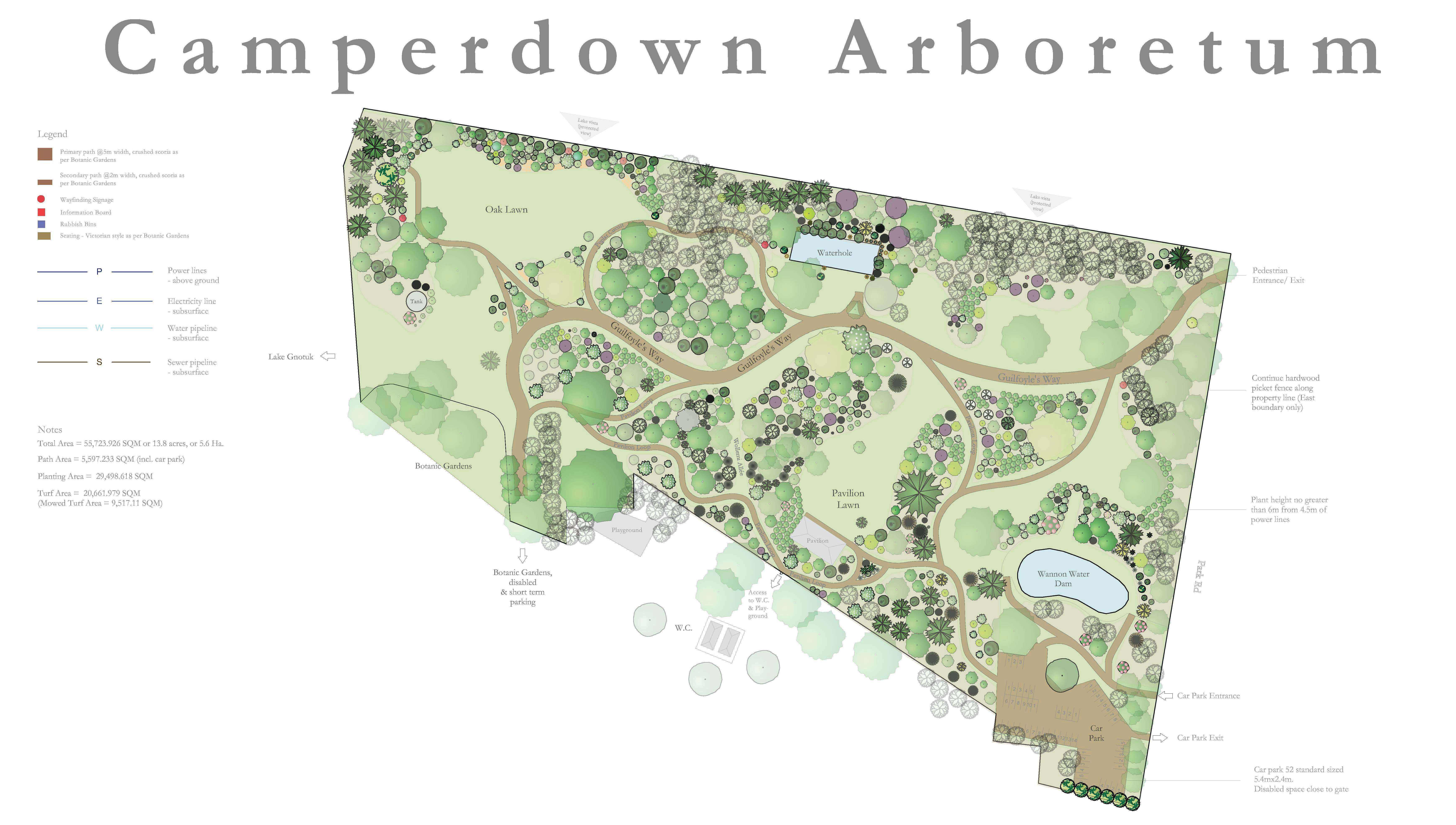
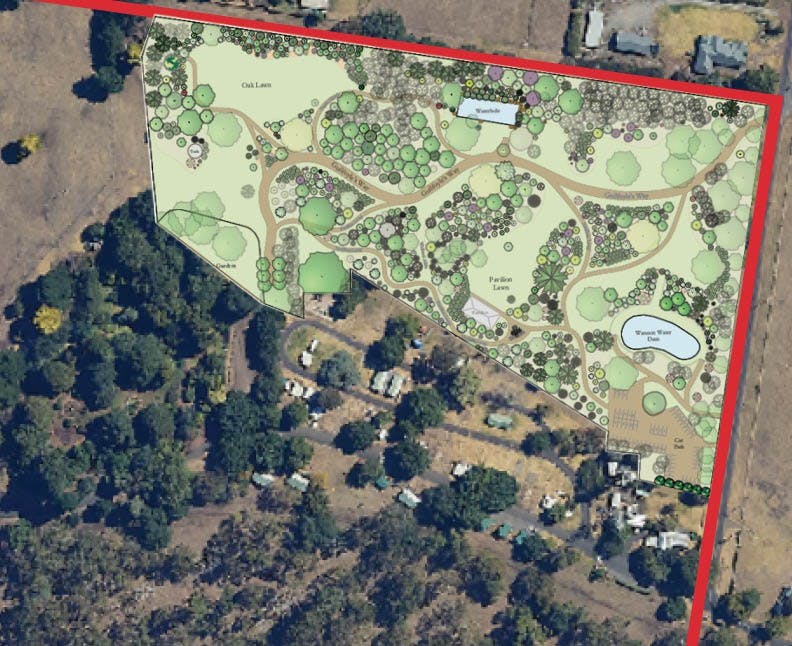
The Draft Masterplan for the Camperdown Arboretum considers the 5.6 hectares in the north east corner of the arboretum and includes winding paths, picnic areas, and beautiful views of Lake Gnotuk. This Draft Masterplan proposes to restore historic garden designs by William Guilfoyle and add new trees like oaks, maples, and Wollemi pines. There will be signs, seating and spaces for learning and relaxing. The vision is for the Arboretum to be a national champion of biodiversity of a wide range of tree species from Australia and around the world, and those species that are considered threatened.
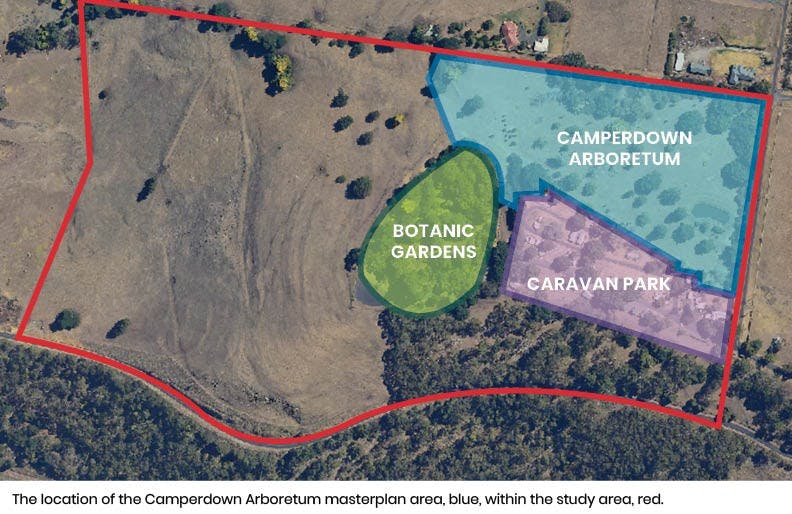
This Masterplan encompasses the north-east corner of the site, excluding the neighbouring Camperdown Botanic Gardens, caravan park and grazing land, with consideration to further stages beyond the current area in the future.
The Camperdown Arboretum Master Plan was developed through community consultation in first developing a concept design, through to the final draft masterplan that is now available for comment.
The Masterplan contains a number of features including the following:
A large collection of rare trees and some critically endangered in the wild
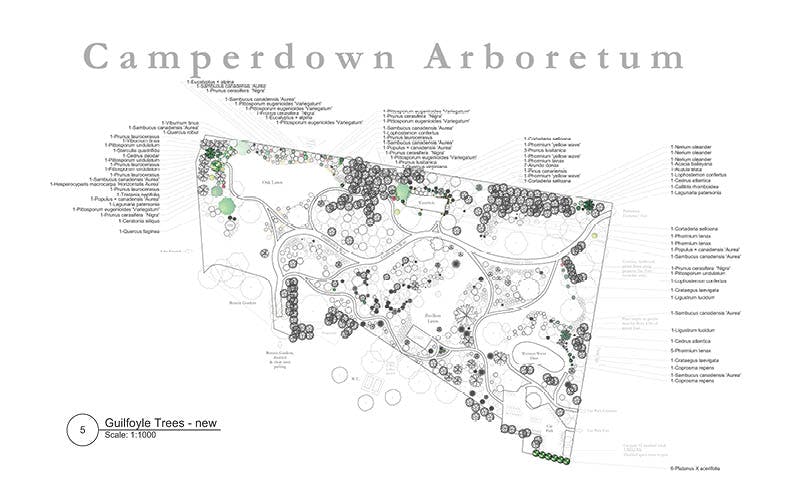
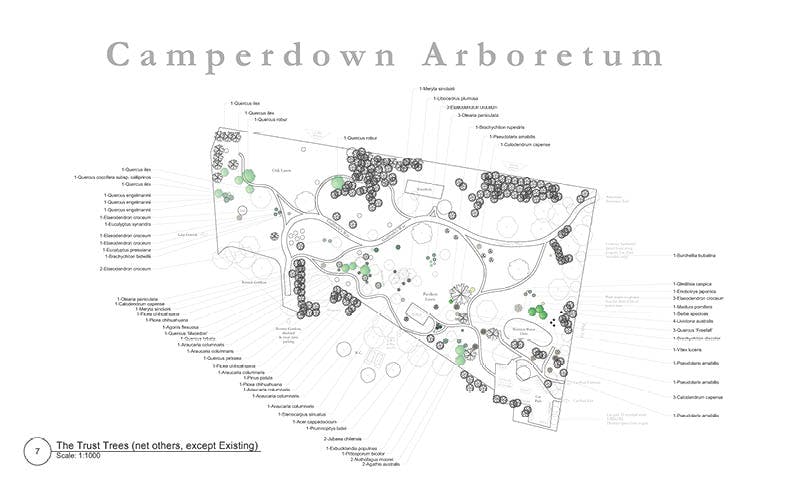
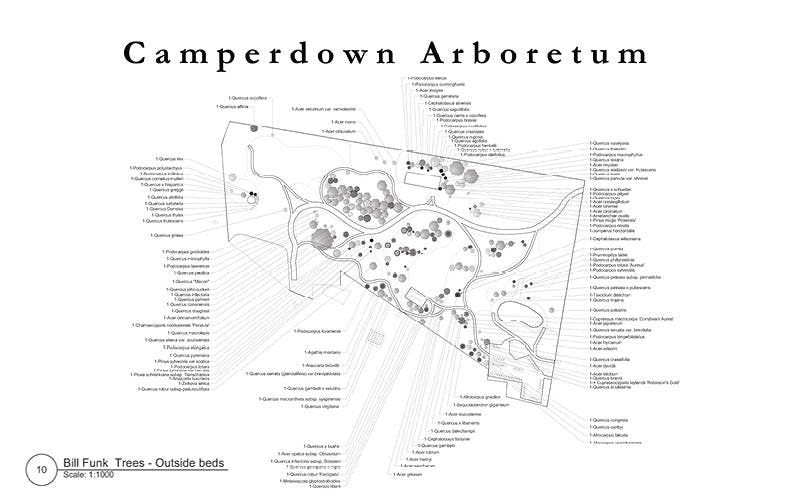
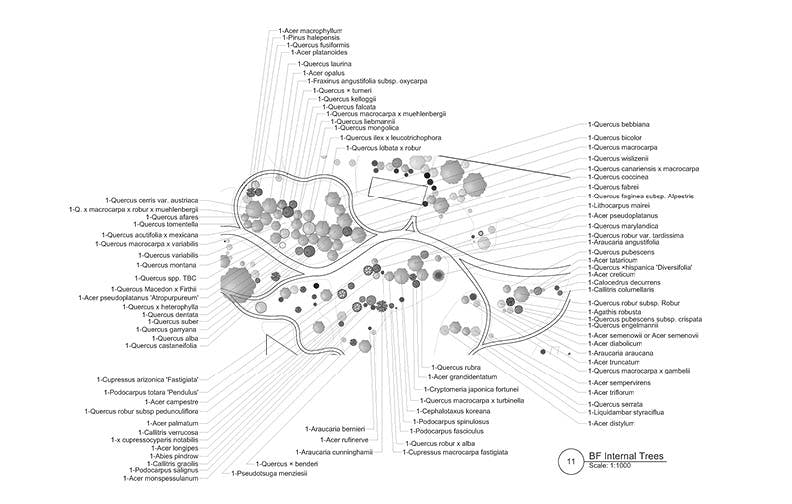
Consideration of a number of design layers including Guilfoyle design, Succession planting, Bill Funk trees, Camperdown Botanic Garden Trust collection of trees and seasonal ornamentals
A small grove of critically endangered Wollemia nobilis
A forest of oaks – Oak Acre – the largest public collection of Quercus in Australia, possibly in the Southern Hemisphere
The oak lawn overlooks the oak forest which is a natural hillside amphitheatre – with distant views that are protected
A picnic pavilion – orientated to the protected distant views
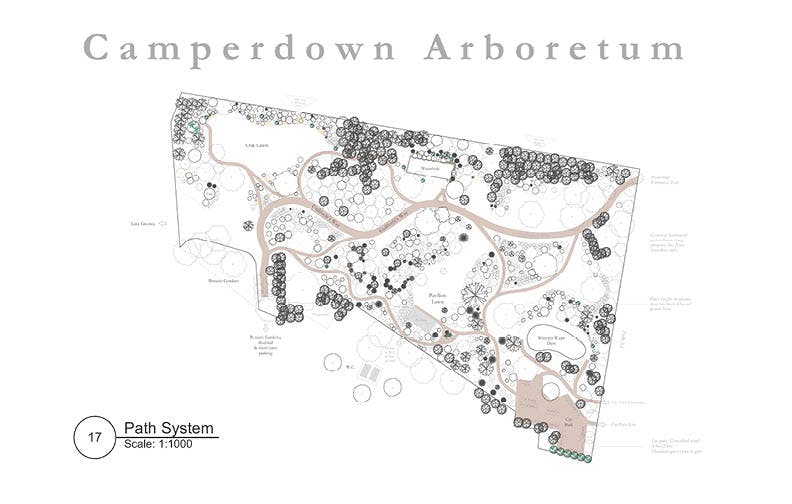
Meandering paths with glimpses to water features
A diverse collection of trees from around the world, with candidates for National Collections of Quercus (Oaks) and Acers (Maples)
The Camperdown Botanic Gardens and Arboretum are on a hill approximately 3km from Camperdown's CBD with commanding views over the twin volcanic lakes of Bullen Merri and Gnotuk. The site was reserved as a public park in 1869, with William Guilfoyle, director of the Royal Melbourne Botanic Gardens, guiding development of the site between 1888 and 1910. Guilfoyle provided plans and planting lists for the Arboretum, which is home to rare and significant trees.
The precinct is listed on the Victorian Heritage Register. The Arboretum is in the north-east of the precinct, with the Botanic Gardens in a fenced area to the south-west of the Arboretum.
The Draft Masterplan for the Camperdown Arboretum considers the 5.6 hectares in the north east corner of the arboretum and includes winding paths, picnic areas, and beautiful views of Lake Gnotuk. This Draft Masterplan proposes to restore historic garden designs by William Guilfoyle and add new trees like oaks, maples, and Wollemi pines. There will be signs, seating and spaces for learning and relaxing. The vision is for the Arboretum to be a national champion of biodiversity of a wide range of tree species from Australia and around the world, and those species that are considered threatened.
This Masterplan encompasses the north-east corner of the site, excluding the neighbouring Camperdown Botanic Gardens, caravan park and grazing land, with consideration to further stages beyond the current area in the future.
The Camperdown Arboretum Master Plan was developed through community consultation in first developing a concept design, through to the final draft masterplan that is now available for comment.
The Masterplan contains a number of features including the following:
A large collection of rare trees and some critically endangered in the wild
Consideration of a number of design layers including Guilfoyle design, Succession planting, Bill Funk trees, Camperdown Botanic Garden Trust collection of trees and seasonal ornamentals
A small grove of critically endangered Wollemia nobilis
A forest of oaks – Oak Acre – the largest public collection of Quercus in Australia, possibly in the Southern Hemisphere
The oak lawn overlooks the oak forest which is a natural hillside amphitheatre – with distant views that are protected
A picnic pavilion – orientated to the protected distant views
Meandering paths with glimpses to water features
A diverse collection of trees from around the world, with candidates for National Collections of Quercus (Oaks) and Acers (Maples)
The Camperdown Botanic Gardens and Arboretum are on a hill approximately 3km from Camperdown's CBD with commanding views over the twin volcanic lakes of Bullen Merri and Gnotuk. The site was reserved as a public park in 1869, with William Guilfoyle, director of the Royal Melbourne Botanic Gardens, guiding development of the site between 1888 and 1910. Guilfoyle provided plans and planting lists for the Arboretum, which is home to rare and significant trees.
The precinct is listed on the Victorian Heritage Register. The Arboretum is in the north-east of the precinct, with the Botanic Gardens in a fenced area to the south-west of the Arboretum.
Isabella Taylor helped nurture the gardens in their early years. Image credit Camperdown & District Historical Society / Victorian Collections
Councillor shares family link to Arboretum’s past
Cr Nick Cole’s family ties to the Camperdown Arboretum stretch back generations, with stories of his great-great grandmother helping nurture the gardens alongside famed landscape designer William Guilfoyle.
“My great-great grandmother, Isabella Taylor, used to walk across from Renny Hill* to water the plants, carrying buckets in a heavy Victorian era dress.
“In those days they wouldn’t have had the most comfortable shoes to walk in either.
“They were friends with Guilfoyle and he used to come and stay with them.”
Cr Cole said the Corangamite district was lucky to have the arboretum.
“A lot of people in a small town like Camperdown wouldn’t have access to anything like that.
“Succession planning is a very, very important thing.
“I encourage everyone to go up there and have a look because it is an amazing place.
“I think this plan, going ahead, will make it a more extraordinary, amazing place for Camperdown.”